

Choosing the right printing method can define the durability, comfort, and visual impact of sportswear. In competitive athletics, branding must last as long as the performance. This guide compares Silk Screen Printing vs Sublimation in Sports to help teams, brands, and organizations make the best decision.
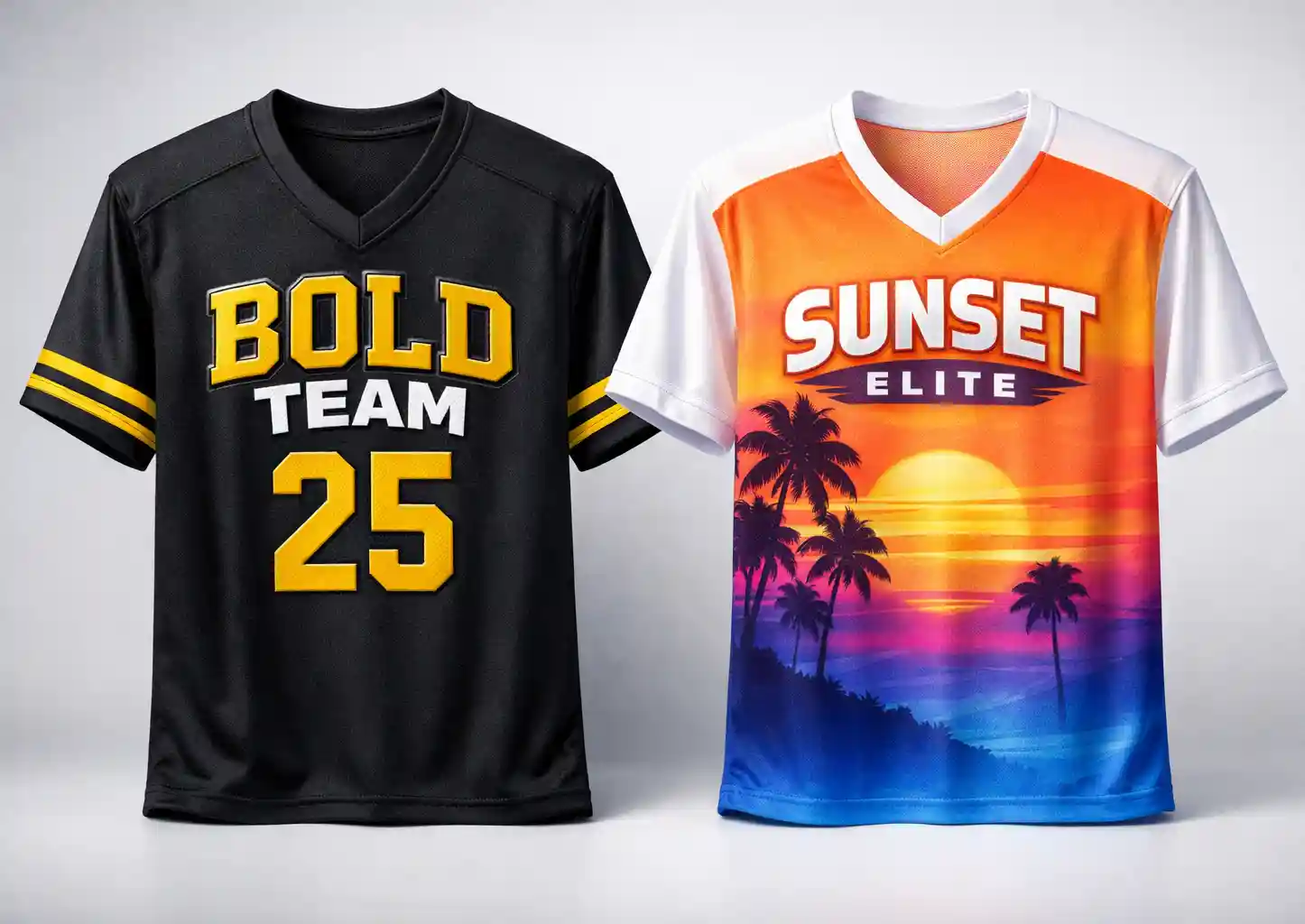
Silk Screen Printing remains one of the most trusted decoration methods in the athletic industry. This technique pushes ink through a mesh stencil directly onto the fabric surface. As a result, the design sits on top of the garment.
First, it delivers bold and opaque colors. This is especially important for team logos and numbers on dark jerseys. Moreover, the ink layer provides strong resistance against repeated washing and friction.
According to industry insights from SGIA – Specialty Graphic Imaging Association (https://www.printing.org/), screen printing continues to dominate bulk apparel production due to durability and cost efficiency.
Excellent durability for contact sports
Cost-effective for large team orders
Works on cotton, blends, and polyester
Vibrant spot colors
For bulk athletic orders, many organizations rely on professional providers like ShopD2S to ensure consistent print quality and long-lasting results.
Sublimation printing uses heat to transfer dye directly into polyester fabric. Instead of sitting on top, the ink becomes part of the material.
This method is especially popular for lightweight performance wear.
Unlike traditional ink layering, sublimation does not crack or peel. Since the dye bonds into the fibers, the garment remains breathable.
According to Heat Transfer Warehouse (https://www.heattransferwarehouse.com/blog/what-is-dye-sublimation-printing/), sublimation performs best on 100% polyester fabrics.
Unlimited color gradients
No texture on the fabric surface
Ideal for all-over designs
Lightweight feel
However, sublimation works only on light-colored polyester garments. That limitation often influences team decisions.
Silk Screen Printing provides thicker ink coverage. Therefore, it performs well for high-contact sports like football and basketball.
Sublimation does not crack, but it can fade gradually if exposed to strong UV light over time.
Screen printing works on cotton, blends, and polyester. In contrast, sublimation is limited to polyester fabrics.
If your team prefers cotton training shirts, screen printing becomes the better option.
Sublimation allows full-color gradients and edge-to-edge artwork. Consequently, esports teams and cycling clubs often prefer it.
On the other hand, Silk Screen Printing excels at bold logos and clean typography.
For large team orders with limited colors, Silk Screen Printing is more economical. Setup costs are justified when printing in bulk.
Sublimation can be cost-effective for complex designs but may become expensive for smaller quantities.
Choose Silk Screen Printing if:
You need bulk team jerseys
Your design uses solid spot colors
You want long-term durability
You print on cotton or blended fabrics
Many athletic organizations prefer this method because it balances performance and affordability.
You can explore professional athletic printing services directly at https://shopd2s.com/ to evaluate bulk production options.
Select sublimation if:
You require full-coverage artwork
Your garment is 100% polyester
You want a lightweight, breathable feel
Your design includes gradients or photographic elements
This method suits modern sports aesthetics, especially for running clubs and cycling teams.
Ultimately, the decision depends on fabric type, budget, and design complexity.
If durability and cost efficiency matter most, Silk Screen Printing stands out. However, if vibrant all-over graphics and lightweight performance are your priority, sublimation offers unmatched design freedom.
For professional sports apparel customization, it is essential to partner with experienced providers who understand both techniques.