

Athletic apparel demands precision, durability, and bold visual impact. Therefore, preparing artwork correctly for Athletic Silk Screen Printing is essential to achieve vibrant colors, sharp details, and long-lasting prints. Whether you are designing jerseys, team shirts, or training gear, proper artwork setup ensures professional results.
At ShopD2S, we specialize in high-quality athletic printing solutions that combine performance and style. You can explore our custom printing services at https://shopd2s.com/.
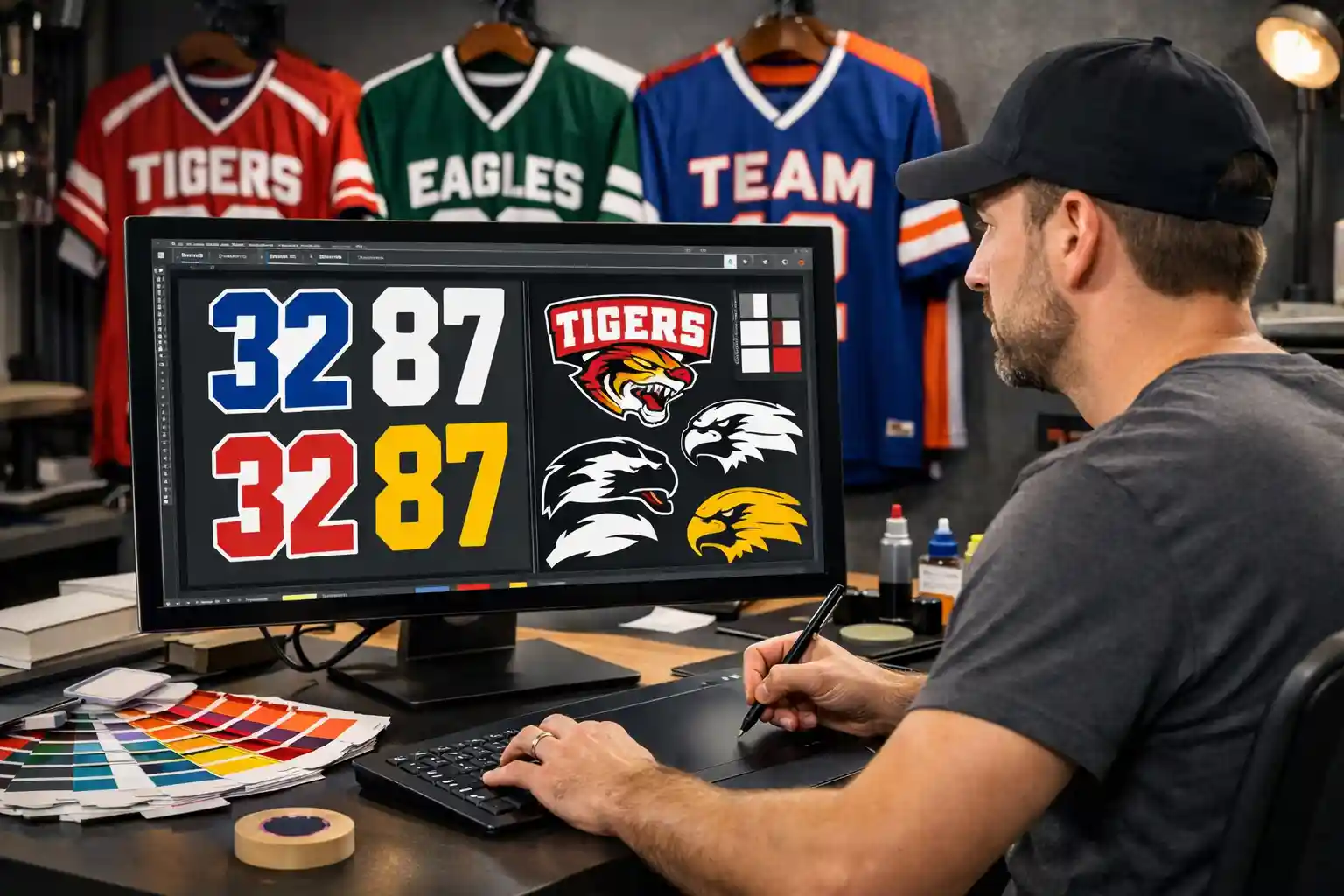
Athletic uniforms experience intense movement, frequent washing, and outdoor exposure. As a result, Athletic Silk Screen Printing artwork must be designed for durability and clarity.
When artwork is not properly prepared, issues like color bleeding, misalignment, and fading may occur. However, well-prepared files ensure:
Accurate color separation
Sharp edges and clean lines
Long-lasting print quality
Efficient production workflow
For an in-depth overview of screen printing fundamentals, you can review this guide from Screen Printing Basics by Printful.
Vector artwork is the industry standard for Athletic Silk Screen Printing. Unlike raster images, vector files maintain sharpness at any size.
AI (Adobe Illustrator)
EPS
SVG
High-resolution PDF
These formats allow printers to separate colors precisely. Additionally, they reduce the risk of pixelation when scaling designs for large jersey prints.
If you are unsure about your file quality, our team at https://shopd2s.com/ can review and optimize your artwork before production.
Color preparation is crucial for sports apparel. Since each color requires a separate screen, thoughtful color planning improves both quality and cost efficiency.
Use solid spot colors instead of gradients.
Convert fonts to outlines.
Limit unnecessary color variations.
Match colors using Pantone codes.
For accurate color matching standards, refer to Pantone Color Matching System.
Moreover, avoid overly complex gradients because they require advanced techniques like halftones. Simpler designs typically produce cleaner and more durable athletic prints.
Fine details often disappear on textured athletic fabrics. Therefore, it is important to:
Maintain minimum line thickness of 1.5 pt or higher
Avoid extremely small text
Increase spacing between elements
Athletic Silk Screen Printing performs best with bold graphics. Thick lines and strong contrast ensure visibility from a distance, which is essential for sports teams.
Before finalizing artwork, determine where the design will appear:
Chest logo
Full front print
Sleeve numbers
Back name and numbers
Each placement requires correct scaling. For example, jersey numbers must comply with league size standards. Consequently, always confirm measurements before exporting your file.
For professional placement guidance and custom team solutions, visit https://shopd2s.com/.
Athletic garments are often made from polyester or moisture-wicking blends. These materials may require specialty inks such as:
Plastisol ink
Water-based ink
Discharge ink
Low-bleed ink for polyester
Low-bleed inks are especially important because polyester fabrics can release dye during printing. As a result, improper ink selection may lead to color migration.
For further reading on printing on performance fabrics, check this resource from SGIA – Specialty Graphic Imaging Association.
Before mass production begins, request a digital proof or physical sample. This step allows you to verify:
Color accuracy
Alignment
Placement
Overall visual impact
Testing ensures that Athletic Silk Screen Printing results match expectations. In addition, it reduces costly reprints.
Even experienced designers can overlook important preparation steps. Avoid the following:
Submitting low-resolution JPEG files
Using RGB color mode instead of CMYK or spot colors
Forgetting to outline fonts
Ignoring fabric compatibility
Careful preparation prevents delays and guarantees smoother production.